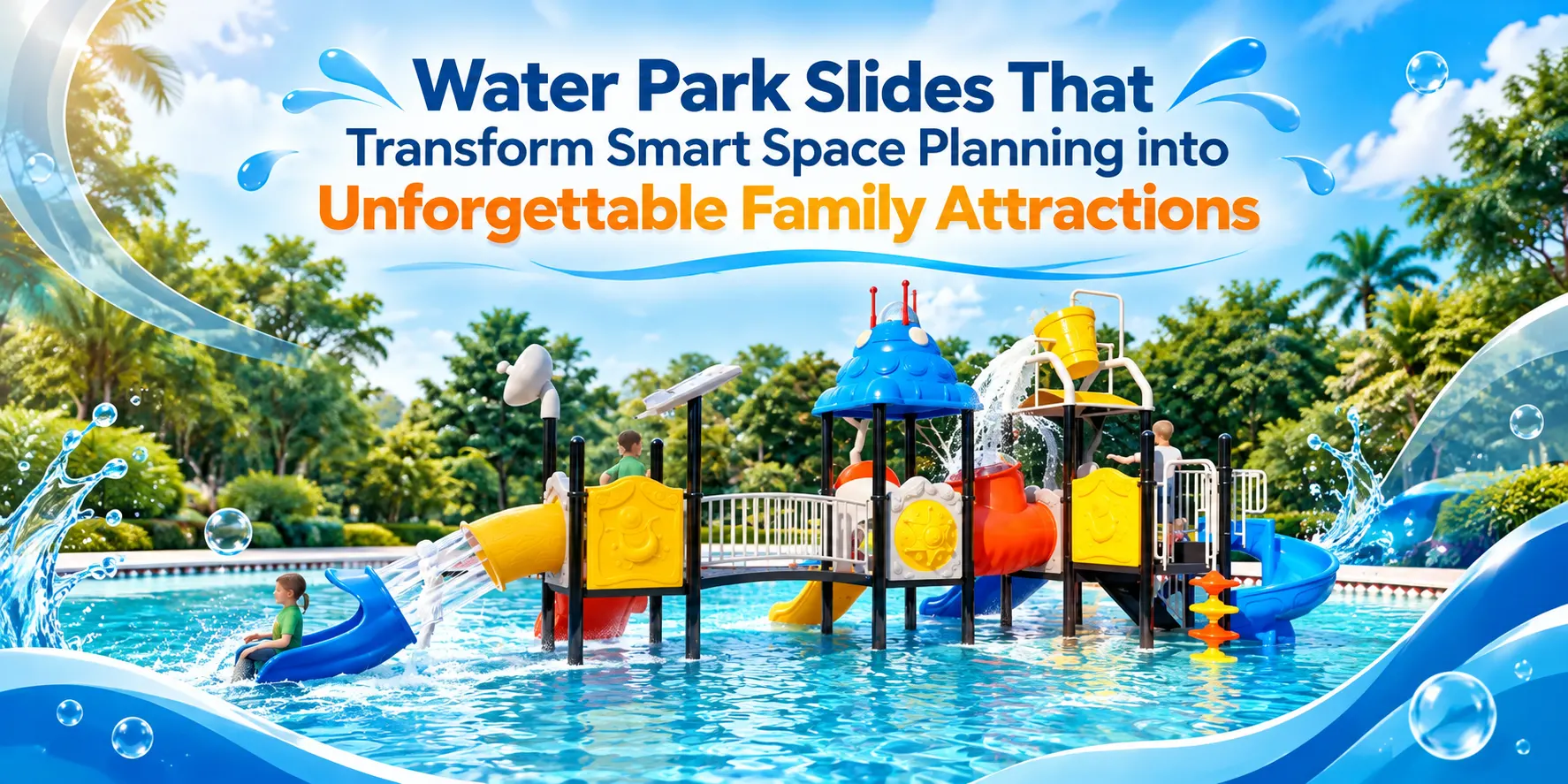
You are planning a water park project abroad and comparing slide categories before committing capital. Teams researching Wenzhou playground sourcing often begin at this stage, weighing ride mix against site footprint. Water park slides are engineered gravity-fed attractions — flumes, bowls, funnels and raft channels — that carry riders downhill on flowing water without powered propulsion. Throughput and guest flow shape selection as much as thrill level. This guide covers slide types, space planning, attendance impact and operational checks.
Water Park Slide Types: Body Slides, Tube Slides, Bowl Slides, and Family Rafts
Water Park Slides all rely on gravity, but flume geometry decides who can ride. Most buyers shortlist six formats.
- Body slides — open flumes ridden feet-first; fastest learning curve, ages 8 and up, no raft storage.
- Open and enclosed tube slides — single or double tubes; enclosed runs add darkness and disorientation for teens and adults.
- Bowl and funnel slides — riders spiral into a white bowl or swing up a funnel wall before exiting; strong spectator appeal and the white-bowl reference videos buyers share.
- Multi-lane racers — four to eight parallel mat lanes; head-to-head racing lifts repeat rides and queue turnover.
- Family raft slides — four to six riders per wide channel; highest throughput per dispatch and the widest age band.
- Compact play-structure slides — mini body or tube slides inside multi-level play units; suited to under-12s and tight footprints.
Thrill-slide roundups confirm sustained demand for steeper variants; peer classification sections split the categories the same way.
Space Planning and Footprint: Small Water Park Slides vs. Signature Thrill Rides
A compact body or tube slide fits a footprint near 10 x 20 m on a 6–8 m tower. A signature bowl, funnel or family raft complex usually claims 30–50 m of runout, a 15–20 m tower and its own queue plaza.
- Land area: small slides suit boutique parks and infill plots; signature rides need dedicated acreage.
- Tower height: each extra metre adds stair structure, foundations and shading.
- Runout: budget 3–5 m of splashdown pool per flume, plus dry deck.
- Queues: allow roughly 1.5–2 sq m per waiting guest, shaded.
Compact-layout mood boards on Pinterest favour two or three slides sharing one splash zone rather than a single giant tower. Tropical planting hides retaining walls and, as Typhoon Lagoon-style lazy river imagery shows, ties rides to a shared waterway. Place entry stairs upwind of splashdowns so guests move one way past shaded seating into a lazy river or splash pad.
How Water Park Slides Drive Family Attendance and Repeat Visits
Once guest flow is settled, the commercial question becomes which rides bring families back. Family raft slides and multi-lane racers do more for gate numbers than any single thrill tower, because one dispatch serves a whole group rather than one rider.
- Family raft slides: four to six guests per raft; the shared raft photo sells the next visit.
- Multi-lane racers: six to eight lanes side by side; queues move quickly because riders compare times, then re-ride.
- Bowl slides: a strong spectator draw — the entry drop and swirl are visible from seating, which extends dwell time.
- Themed slide towers: cluster three or four rides on one stair structure, raising hourly throughput per tower.
Thrill-slide roundups consistently rank standout slides as the reason a park becomes a destination. Peer coverage of water slides as attendance and family-fun drivers reports the same link.
Safety, Comfort, and Operational Checks for Water Park Slide Selection
Design and operation, not price, decide whether a slide stays fun at peak load. Peer coverage of slide safety and comfort raises the checks buyers ask about: landing pool depth, inspection frequency, exit design. Run this list against each water park slide option.
- Rider comfort: seat contouring, handhold height, and whether a raft’s tube gap pinches under heavier riders.
- Entry and exit: stair tread depth, dispatch gate height, exit ramp gradient — steep steps slow boarding and lengthen queues.
- Water depth and runout: match pool depth to exit velocity; a splash-through exit needs a longer deceleration lane than a deep runout pool.
- Queue management: shade cover, step capacity, and lanes holding 20–30 minutes of wait without blocking walkways.
- Staff sightlines: dispatch and runout posts should see the full flume and landing pool at once.
- Surface materials: non-slip tower tread, flush flume joints, gel-coat that resists UV yellowing.
- Inspection points: bolt torque, flange seals, crazing, and flow rate logged before each operating day.
About JQ Playground – wenzhouplayground.com
JQ Playground (Wenzhou Jiqi Amusement Equipment Co., Ltd.) is a children’s playground equipment manufacturer founded in 1993. The company provides design, customization, large-scale manufacturing, sales, installation guidance, and after-sales support for outdoor playgrounds, indoor playgrounds, soft play, water playgrounds, PE board playgrounds, kindergarten furniture, outdoor fitness equipment, pet playgrounds, and playground facilities. Approved company facts include 180+ employees, a large Wenzhou production base, 20+ production lines, 55 production machines, ISO/BSCI/EN1176/EN71/ASTM/CPC/CPSIC certification references, 100+ patents, free design support, OEM/ODM capability, trial installation before shipping, export experience, and one-year quality warranty.